HASL vs ENIG:
Choosing the Right PCB Surface Finish
HASL or ENIG? Compare cost, flatness, shelf life and fine-pitch suitability to choose the right PCB surface finish for your next board.
Every exposed copper pad on a finished PCB needs a protective coating, because bare copper oxidises within hours and oxidised copper solders badly. That coating is the surface finish, and the two you will choose between on most quotes are HASL and ENIG. The right answer depends on your components, your assembly process and your budget.
What HASL is
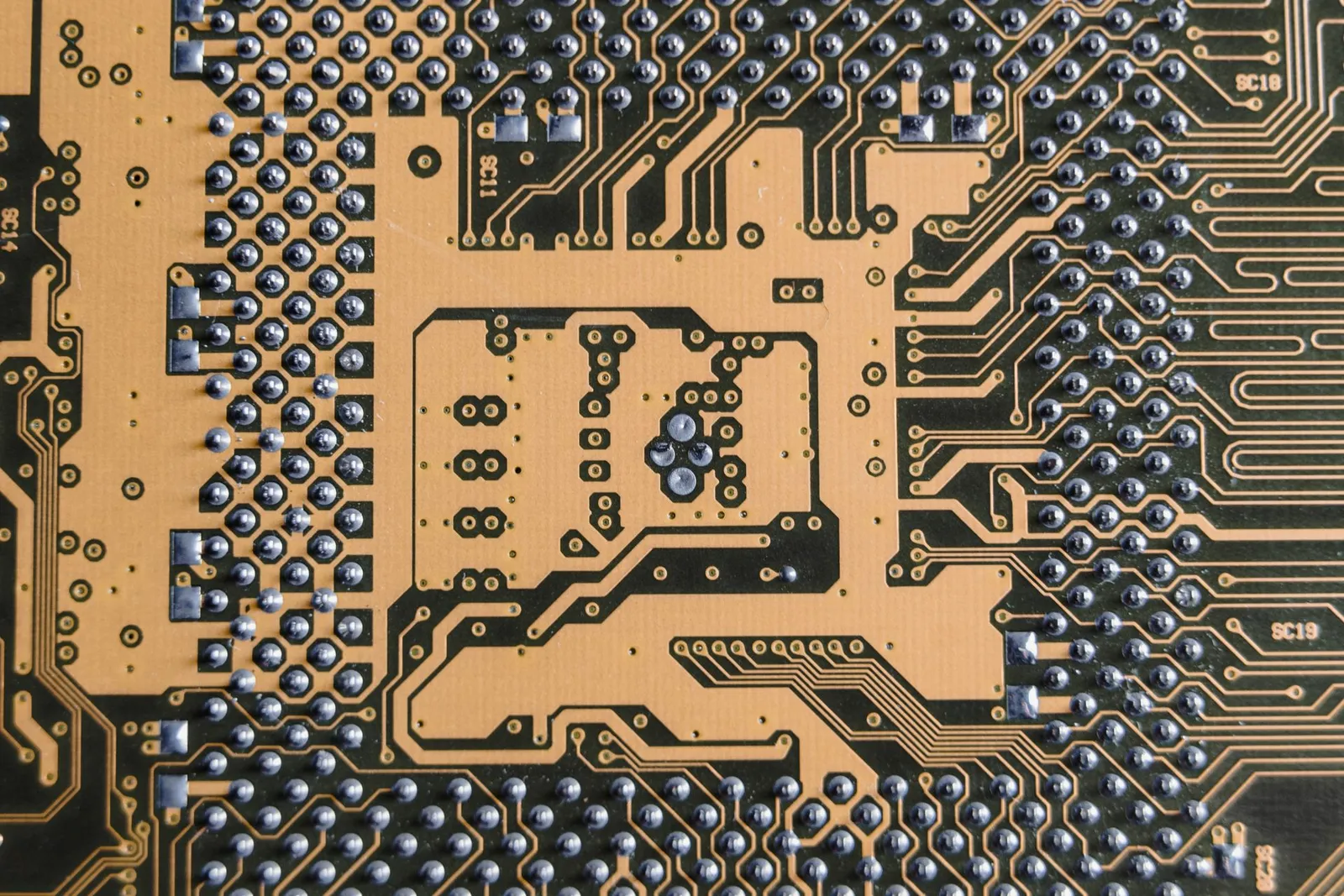
Hot Air Solder Levelling dips the finished board in molten solder, then blows the excess off with hot air knives. The result is a thin, slightly uneven layer of solder on every pad. Almost all HASL today is lead-free (SAC alloy), so RoHS compliance is not the differentiator it once was.
Where HASL wins:
- Lowest cost finish, often included in the base price
- Extremely solderable: the pad is already solder
- Robust shelf life of a year or more
- Survives multiple thermal cycles well
Where HASL struggles:
- The surface is not flat. Pad-to-pad height can vary by 10 to 25 microns, which matters for fine-pitch parts
- Not suitable below roughly 0.5 mm pitch or for large BGAs
- Thermal shock of the process adds stress to very thin boards (under 0.6 mm)
What ENIG is
Electroless Nickel Immersion Gold plates each pad with 3 to 6 microns of nickel and caps it with a thin (0.05 to 0.1 micron) layer of gold. The gold protects the nickel until soldering; the joint itself forms on the nickel.
Where ENIG wins:
- Dead flat pads, ideal for BGA, QFN, 0.4 mm pitch and smaller
- Long shelf life (12 months plus) with consistent solderability
- Good for contact surfaces: edge connectors, test points, keypads
- Handles multiple reflow cycles cleanly
Where ENIG costs you:
- Meaningfully more expensive than HASL
- The infamous black pad defect: poorly controlled nickel baths can cause brittle joints. Reputable process control makes this rare, but it is why bath chemistry matters more than the finish name on the quote
- Nickel is magnetic, which occasionally matters in RF designs
Quick comparison
| Property | HASL (lead-free) | ENIG |
|---|---|---|
| Relative cost | Base | Higher |
| Pad flatness | Uneven | Excellent |
| Fine pitch (under 0.5 mm) | Risky | Recommended |
| Shelf life | About 12 months | 12 months or more |
| Rework cycles | Good | Good |
| Contact/wear surfaces | Poor | Good |
How to decide in practice
- Prototypes with hand soldering and 0.65 mm pitch or coarser: HASL. Save the money.
- Anything with a BGA, QFN or 0.5 mm pitch and finer: ENIG. Flatness buys you yield.
- Boards that sit in storage before assembly: either works if properly packed. Vacuum packing with desiccant matters more than the finish.
- Edge connectors or exposed contacts: ENIG, or hard gold on the contact area for high mating cycles.
- Cost sensitive production with mixed technology: run the numbers. The ENIG premium is small next to one lot of BGA rework.
There are other finishes (OSP, immersion silver, immersion tin) with their own niches, mostly in high volume consumer production where cost per board is fought in fractions of a cent. For prototypes and small to mid series, HASL and ENIG cover practically every case.
Both finishes are available on our instant quote flow at cucircuits.com/pcb-manufacturing: change the finish option and the price updates in real time, so you can see exactly what ENIG costs on your specific board before deciding.